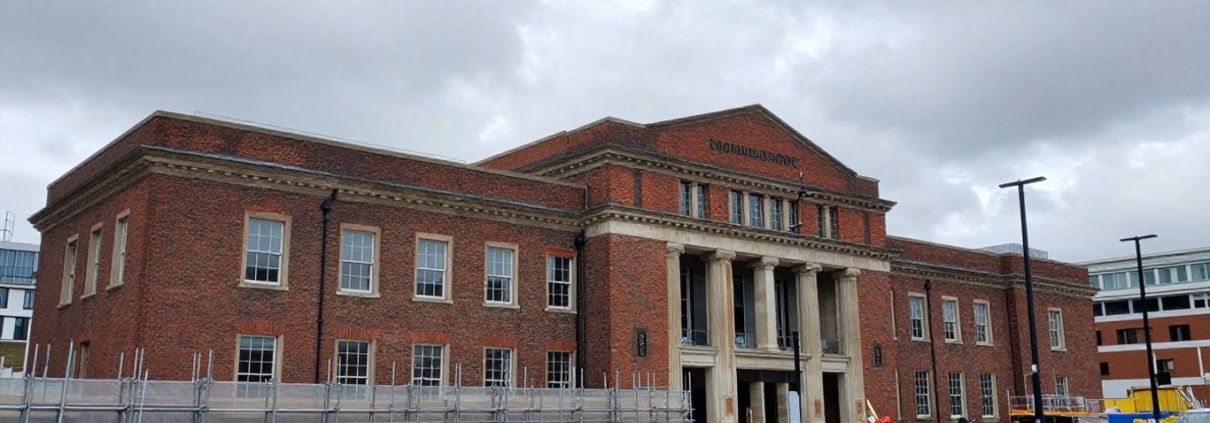
High Court Dismisses Legal Challenge Against Museum of London Demolition
The High Court has dismissed a legal challenge against the demolition of the former Museum of London to make way for new office blocks. The ruling allows the City of London Corporation’s redevelopment plans for the London Wall West site to proceed, despite a minor procedural breach identified by the judge.
Key Takeaways
- A legal challenge against the demolition of the former Museum of London has been dismissed by the High Court.
- The ruling permits the City of London Corporation’s plans to build three new office blocks on the site.
- While a breach of statutory duty was found regarding pre-application document accessibility, it did not affect the lawfulness of the decision.
- The development aims to provide significant new office space and public realm improvements for the City.
Legal Challenge Fails
Barristers representing BQO, the group behind the legal challenge, argued that the City of London Corporation failed to adhere to Environmental Impact Assessment Regulations concerning impartiality and objectivity. They also contended that the Corporation misunderstood or misapplied policy by presuming buildings would be reused rather than demolished, and that alternatives to demolition were not adequately considered. However, Mr Justice Fordham dismissed all three claims.
Breach Identified, But Decision Upheld
Mr Justice Fordham did identify a breach of statutory duty concerning the Corporation’s failure to make pre-application documents inaccessible. Despite this, the judge noted that this procedural issue did not necessarily impact the decision-making process, rendering the final outcome lawful. The court found that the Corporation’s policy did not impose a presumption against demolition, nor did it mandate further inquiries into alternative development proposals.
Project Details and Corporation’s Response
The scheme involves demolishing the former Museum of London and Bastion House to construct three buildings ranging from five to 17 storeys. The project also includes extensive public realm works, aiming to contribute to the City’s target of 1.2 million square metres of additional office floorspace by 2040. A City of London Corporation spokesperson welcomed the decision, stating that the development will be crucial for the Square Mile’s future growth, providing high-quality, sustainable office space and creating capacity for thousands of jobs. The development will also enhance public space, introduce a cultural area, and improve access to historical features like the Roman Wall.
Objectors’ Disappointment
A spokesperson for BQO expressed disappointment with the outcome but maintained that raising their concerns was necessary and justified. They acknowledged the judge’s finding of a breach of statutory duty regarding objectivity but noted that the permission remained lawful due to the lack of impact on the final decision. While respecting the court’s process, BQO believes the judgment highlights the importance of strong evidence regarding demolition options and the critical role of climate change impact in applying sustainability policy.