Legal Battle Erupts Over Clandon Park’s Future as ‘Preserved Ruin’
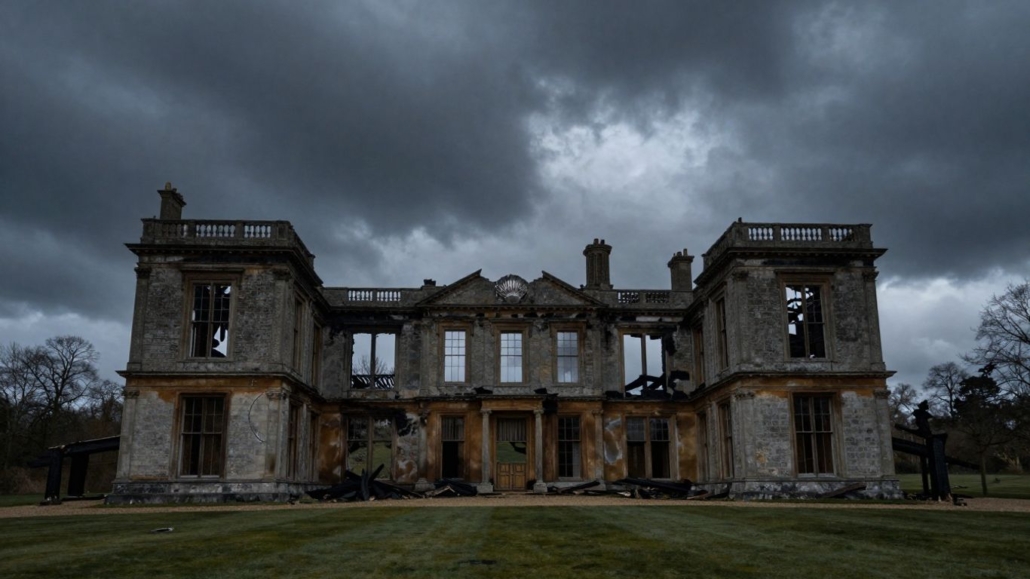
Campaigners have launched a legal challenge against Guildford Borough Council’s decision to preserve the fire-damaged Clandon Park as a ruin, rather than fully reconstructing its historically significant interiors. The Georgian Group is spearheading the judicial review, arguing the council’s approval of plans to maintain the Grade I-listed mansion as a fire-damaged ‘shell’ sets a dangerous precedent.
Key Takeaways
- The Georgian Group is challenging Guildford Borough Council’s decision to approve plans for Clandon Park.
- The plans, by Allies and Morrison, will preserve the 18th-century mansion as a fire-damaged ‘shell’.
- The National Trust, owner of the property, backs the ‘preserved ruin’ approach.
- Campaigners argue the decision unlawfully assesses the significance of historic buildings after damage.
The Controversy Unfolds
Last March, Guildford Borough Council unanimously approved plans to maintain Clandon Park, a Grade I-listed stately home, in its current state following a devastating fire in 2015. These plans, developed by Allies and Morrison, involve preserving the 18th-century Palladian mansion as a fire-damaged ‘shell’, with the National Trust, the property’s owner, in support. This decision came after the housing secretary, Steve Reed, opted not to call in the council’s decision.
The move has drawn significant criticism, with renowned classical architect Francis Terry labelling the National Trust’s stance an ‘act of barbarism’ against the historic building. The interiors of Clandon House, designed by Giacomo Leoni in the 1730s for the second Lord Onslow, were considered ‘among the finest of their date’ before the blaze destroyed all but one room.
Legal Challenge and Precedent
The Georgian Group has now initiated a legal bid to challenge the council’s approval. Anya Lucas, Director of the Georgian Group, stated that the council’s decision, if not overturned, would have ‘far-reaching negative consequences’. The judicial review, if permitted by the High Court, will scrutinise whether the council followed correct legal procedures and applied facts appropriately in its decision-making process.
Lucas emphasised that the case extends beyond Clandon Park. ‘If a public body can adopt such a radical approach to a Grade I-listed building – which burnt only relatively recently and whose interiors are both internationally significant and well-documented – what message does it send to the owners of more modest listed buildings of all types up and down the country?’ she questioned.
The Georgian Group contends that the council’s decision-making was unlawful and establishes a dangerous precedent for assessing the significance of historic buildings post-damage.
National Trust’s Position
Following the 2015 fire, the National Trust initially proposed restoring the property and its interiors. However, subsequent plans focused on restoring the façade while leaving the interiors as a ruin. Under the approved proposals, viewing platforms and a roof garden will be installed to allow visitors closer access to the building’s fabric. A spokesperson for the National Trust affirmed their commitment to the scheme, stating it will ‘conserve the surviving building at Clandon and renew it as a welcoming, fully functional building for current and future generations.’
A spokesperson for Guildford Council confirmed they will contest the legal challenge, arguing their decision was lawful. The final decision on whether to proceed to a judicial review hearing will rest with the High Court.
Sources
- Campaigners launch legal bid against decision to keep Clandon Park as ‘preserved ruin’, The Architects’ Journal.