Tag Archive for: Lifestyle

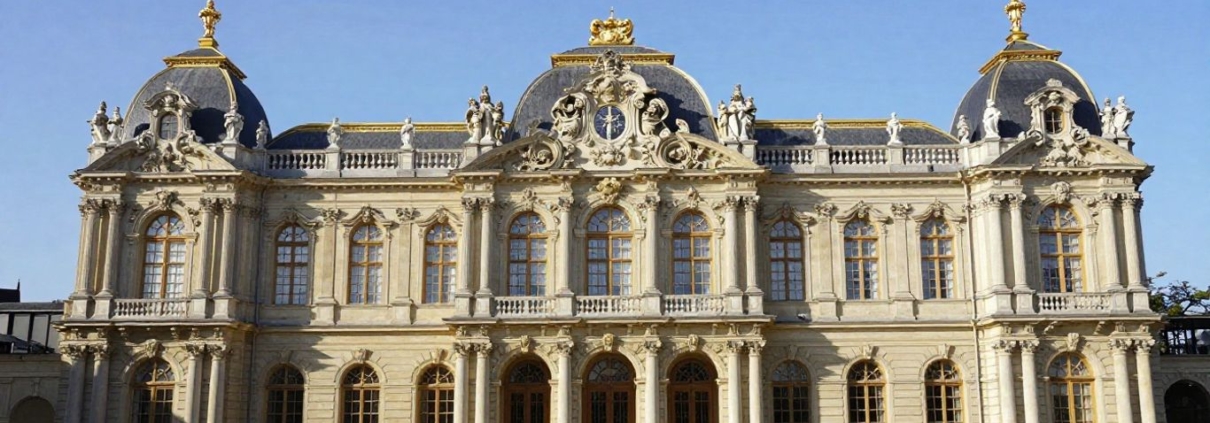
Blenheim Palace architecture and gardens.

Blenheim Palace Invites Future Architects to Leave Their Mark on History

Blenheim Palace has launched an exciting nationwide design competition, offering aspiring architects and designers a unique opportunity to contribute to the historic estate. This initiative coincides with a major restoration project and a special exhibition celebrating the palace’s renowned architect, Sir John Vanbrugh.

Key Takeaways

  • A nationwide design competition is open to young architects and designers.
  • Winners have the chance to sign a roof slate to be installed on the palace.
  • The competition celebrates the 300th anniversary of architect Sir John Vanbrugh.
  • It runs alongside the “Blueprints of Power” exhibition and a £12 million roof restoration project.

A Chance to Shape History

Young architects across the UK are being given an extraordinary chance to leave a lasting legacy on Blenheim Palace. The competition aims to inspire the next generation of creative talent, with the ultimate prize for winners being the opportunity to sign a roof slate that will be permanently installed on the palace as part of its significant restoration efforts.

Celebrating Architectural Heritage

The competition is being held in conjunction with Blenheim’s “Blueprints of Power” exhibition, which commemorates the 300th anniversary of Sir John Vanbrugh, the visionary architect behind the Baroque masterpiece. This initiative provides a fresh perspective on the palace’s rich architectural history and its ongoing preservation.

Competition Categories and Prizes

The design challenge features three distinct entry categories:

  • Budding Architects (Under 12s): Participants are invited to draw their vision of Blenheim Palace.
  • Aspiring Architects (Ages 12-17): Entrants should create a mood board showcasing a modern feature that could be integrated into the palace.
  • Rising Architects (18+): Students of architecture, construction, or design-related subjects are challenged to reimagine Blenheim Palace as if it were designed today.

Entries are to be submitted as an A4 PDF visual to blenheim@cabcampaign.co.uk by Wednesday, March 18. Winners will be announced on Monday, March 23, and will be invited to the palace’s topping-out ceremony. Top prizes include signing a roof slate for installation, an exclusive tour with the Head of Built Heritage, a signed book on architectural conservation for the adult category winner, an annual pass to Blenheim Palace, and afternoon tea for two.

The Restoration Project

The competition is closely linked to the £12 million roof restoration project, which commenced in early 2025. This vital work addresses damage caused by age, weather, and water infiltration, ensuring the preservation of the UNESCO World Heritage Site for future generations. Blenheim Palace previously launched a “Sign a Slate” campaign, allowing the public to contribute to the restoration by donating and signing a roof slate.


Sources

Iconic Egyptian Halls building facade in Glasgow.

Glasgow’s Iconic Egyptian Halls Set for Grand Revival as Luxury Hotel

Glasgow’s beloved Egyptian Halls, a Grade A-listed architectural gem designed by Alexander Thomson, is poised for a significant transformation. After decades of neglect, plans have been approved to rescue the building from its dilapidated state and repurpose it into a vibrant hotel, breathing new life into the heart of the city.

Key Takeaways

  • Glasgow City Council has selected Ediston’s proposal to redevelop the Egyptian Halls.
  • The building will be converted into a hotel with ground and first floors dedicated to leisure and retail.
  • A compulsory purchase order (CPO) process was initiated by the council to facilitate the rescue.
  • The project aims to secure the long-term future of the historic structure with minimal structural changes.

A Historic Building’s Decline

The Egyptian Halls, constructed in 1872 on Union Street, is celebrated as one of Glasgow’s finest examples of Victorian architecture, inspired by Greek, Assyrian, and Egyptian motifs. Despite its architectural significance, the building has been largely vacant and deteriorating for the past 30 years. It has been a persistent concern on the Buildings at Risk Register and was even highlighted as one of Europe’s most endangered buildings in 2019.

Council Intervention and Preferred Bid

Recognizing the urgent need for intervention, Glasgow City Council initiated a compulsory purchase order (CPO) process to acquire the site. This allowed the council to invite proposals from interested developers. Following a rigorous evaluation, property firm Ediston’s bid emerged as the preferred choice. Their comprehensive plan impressed the council with its clear management structure, defined timeline, and minimal structural alterations, scoring significantly higher than other submissions.

Future Vision for the Halls

Ediston’s vision involves a multi-faceted approach to revitalizing the Egyptian Halls. The ground and first floors are slated for leisure and retail uses, aiming to create a dynamic public space. The upper floors will be transformed into a hotel, promising a luxurious accommodation option in a prime city-centre location. This redevelopment is expected to not only preserve the building’s heritage but also contribute significantly to the city’s economic and cultural landscape.

Next Steps

The council is now focused on building a robust case for the CPO and negotiating the final terms with Ediston. A subsequent report will be presented to a council committee before the CPO and a legally binding agreement can be finalized. This marks a crucial milestone in securing a future for this architectural masterpiece and reintegrating it into the vibrant life of Glasgow.

Sources

Architect with empty piggy bank in front of mansion.

Architect Disgraced After Embezzling Sister’s Savings for Lavish Lifestyle

A 67-year-old registered architect has been struck off the professional register after being convicted of embezzling his sister’s savings. David Bell pleaded guilty to abusing his power of attorney to steal funds, which he then spent on holidays and cosmetic treatments. The conviction has led to his professional downfall.

Key Takeaways

  • Architect David Bell has been removed from the professional register by the ARB.
  • He admitted to embezzling £160,998 from his sister’s savings.
  • The stolen funds were used for personal luxuries, including holidays and cosmetic procedures.
  • Bell was given power of attorney over his sister’s affairs during her period of dementia.
  • He received a community sentence and must repay the stolen amount.

Abuse Of Trust

David Bell, formerly a director at Edinburgh practice Fouin & Bell Architects, was found to have used his position of power of attorney over his sister, Janet Mann, to misappropriate her funds. The period during which this abuse occurred was between April 2012 and January 2020. Bell and his wife were granted power of attorney over Ms Mann’s affairs. While his wife, Elizabeth Bell, had a not guilty plea accepted, David Bell admitted to the charges.

Lavish Spending And Sister’s Care

The embezzled funds were used to purchase luxury goods, fund private dental work, and pay for holidays in destinations such as the USA and Cuba. The court heard that Ms Mann had returned to Scotland following her husband’s death in 2011 and was subsequently diagnosed with dementia. Her assets were placed under the ‘full control’ of David and Elizabeth Bell. In 2018, David Bell’s request to the City of Edinburgh Council for assistance with his sister’s care triggered an investigation into the management of her estate, revealing the extent of the misappropriation.

Professional Conduct Committee Ruling

The Architects Registration Board (ARB) professional conduct committee met on 20-21 January to consider Bell’s conviction. Bell argued that his conviction was not relevant to his fitness to practice as an architect, suggesting his actions were a ‘failure of management’ rather than dishonesty. However, the committee found this argument lacked appreciation for the criminal offence. They concluded that such behaviour, involving dishonesty and a breach of trust, is fundamentally incompatible with continued membership of the profession. The committee stated that the public and profession would be ‘rightly appalled’ and that erasure was necessary to uphold standards and maintain confidence in the profession’s integrity.

Sentencing And Future Prospects

On 5 June, David Bell was sentenced to 225 hours of unpaid work and ordered to repay the full amount of £160,998 within one year. The sheriff noted that while Bell was in a position of trust and had embezzled funds, a narrow margin allowed for an alternative to custody, considering his first-offender status and willingness to repay. Despite an otherwise ‘unblemished’ professional record spanning over 40 years, the ARB committee decided that erasure from the register was the only appropriate sanction. Bell can reapply for registration after a minimum of two years.

Sources

Architects celebrate successful homelessness appeal donation.

Architects’ Journal’s Homelessness Appeal Surpasses Expectations, Raising Nearly £13,000

The Architects’ Journal (AJ) has successfully concluded its impactful homelessness charity appeal, raising an impressive £12,844.50. The initiative, launched in conjunction with the December issue’s focus on homelessness, saw significant contributions from architectural practices, individual readers, and the AJ’s parent company, Emap, all supporting the vital work of Shelter.

Key Takeaways

  • The AJ’s homelessness charity appeal raised a total of £12,844.50.
  • Contributions came from architectural practices, individual donors, and Emap.
  • The appeal aimed to support Shelter’s efforts in combating homelessness.

Generous Contributions Fuel Success

The appeal, which had an initial target of £15,000, received a substantial boost from guests at the AJ Architecture Awards, who collectively raised £8,500. Following the event, individual readers and numerous architectural firms, including David Chipperfield Architects, shedkm, BPTW, nimtim, NVB Studio, Silk Architecture, and Paul Henry Architects, continued to donate generously. These contributions ranged from £25 to £1,000, demonstrating a widespread commitment to the cause.

AJ editor Emily Booth expressed her gratitude, stating, “Our huge thanks go out to all the practices and architects who have so generously donated to our Shelter charity appeal. It’s such a worthwhile cause and every donation, large or small, will make a difference.” The appeal was extended throughout January to encourage further donations.

Shelter’s Vital Work

Mairi MacRae, director of policy and campaigns at Shelter, conveyed deep appreciation for the support. “We are incredibly grateful to Architects’ Journal and their generous readers for supporting Shelter,” she said. “Thousands of people across England risk sleeping rough tonight, while over 350,000 people are spending the winter homeless in unstable and damaging temporary accommodation. No one should face homelessness alone.”

Shelter’s frontline services offer crucial advice and support, alongside campaigning for systemic change to end homelessness. The funds raised will directly contribute to these essential operations. For every £1 donated to Shelter, 71p is allocated to direct assistance, advice, and campaigning, with 29p used for fundraising efforts.

Broader Context of Homelessness

Recent analysis indicates that the UK faces a significant homelessness crisis, with one in every 200 households experiencing it. While rough sleeping is a visible aspect, the predominant form of homelessness in Britain involves individuals living in temporary accommodation, often due to the inability to afford housing. The AJ has consistently highlighted housing issues, including a previous collaboration on the ‘Good Homes for All’ publication showcasing affordable housing schemes and discussions on the surge in rough sleeping.

Sources